Invisible in the Storm: Climate Vulnerability, Accessibility, and Environmental Health Experiences Among People Living with Multiple Chemical Sensitivity (MCS) in Canada
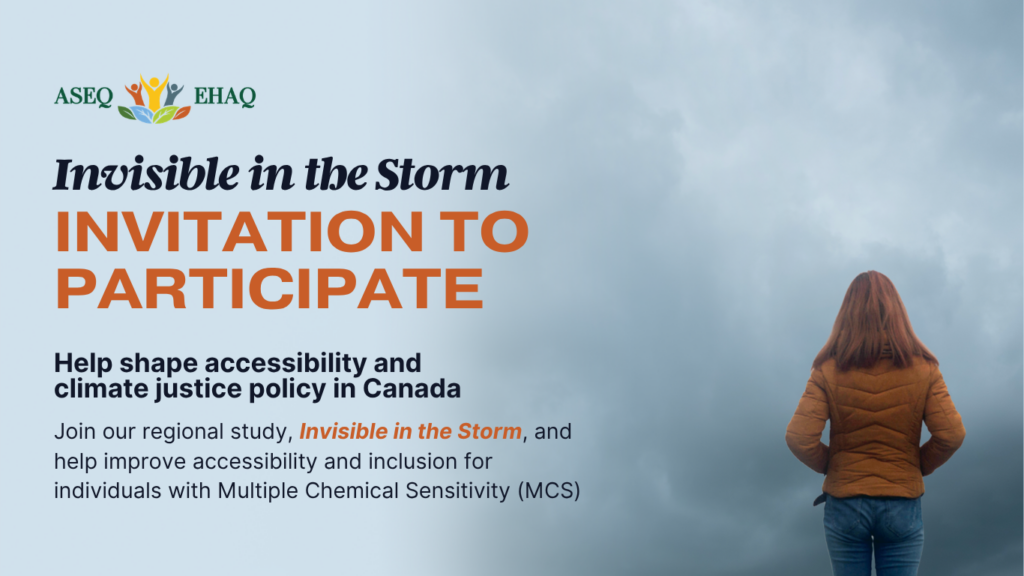
| Do fragrances, smoke, cleaning products, pesticides, solvents, or other everyday chemicals trigger symptoms for you? If exposure to these substances causes headaches, breathing difficulties, fatigue, brain fog, skin reactions, or other symptoms, this research may be for you, even if you have never received a formal diagnosis of Multiple Chemical Sensitivity (MCS). |
To participate click this link: https://www.surveymonkey.com/r/SB6JW9V
To learn more about this research study, please read the information below.
About the Project
Invisible in the Storm is a climate justice and disability inclusion research project led by the Association pour la santé environnementale du Québec – Environmental Health Association of Québec (ASEQ-EHAQ) and funded in part through the Eviance Climate and Disability Community Action Grant.
The project seeks to better understand how climate-related events affect people living with Multiple Chemical Sensitivity (MCS) and those who support them.
Climate-related events such as wildfire smoke, extreme heat, power outages, poor indoor air quality, flooding, emergency evacuations, and disruptions to housing and essential services can create unique challenges for people living with MCS. Despite growing recognition of climate vulnerability among people with disabilities, little research has explored the experiences of people living with MCS in the context of climate change and emergency preparedness.
This project aims to help fill that gap.
What is Multiple Chemical Sensitivity (MCS)?
Multiple Chemical Sensitivity (MCS) is a recognized disability characterized by adverse health effects following exposure to common chemicals and pollutants at levels tolerated by the population.
Potential triggers may include:
- Fragrances and scented products
- Cleaning products
- Smoke and combustion products
- Pesticides
- Solvents
- Building materials
- Other everyday chemical exposures
Symptoms can affect one or many body systems and may include respiratory, neurological, cognitive, gastrointestinal, cardiovascular, dermatological, musculoskeletal, and other health effects.
Why This Research Matters
Climate-related events can increase exposure to environmental triggers and create additional accessibility barriers for people living with MCS.
Examples include:
- Wildfire smoke infiltrating homes and communities
- Extreme heat limiting access to safe environments
- Power outages affecting air filtration and climate control
- Emergency shelters that may not accommodate multiple chemical sensitivity
- Housing challenges during climate-related emergencies
- Disruptions to healthcare and support services
Understanding these experiences is essential for developing more inclusive climate adaptation strategies, emergency preparedness plans, housing initiatives, and accessibility policies.
Project Objectives
The study will explore:
- Climate-related experiences and impacts
- Wildfire smoke and indoor air quality concerns
- Extreme heat and power outages
- Housing and accessibility barriers
- Emergency preparedness and evacuation planning
- Access to emergency shelters and climate refuges
- Community resilience and support systems
- Opportunities to improve accessibility and inclusion
Who Can Participate?
We are seeking participants from Québec and Ontario who are:
- Adults aged 18 years and older living with MCS
- Caregivers, family members, and other support persons of individuals living with MCS
- Participants must be comfortable communicating in English or French.
What Participation Involves
Participation includes:
Online Survey
Participants are invited to complete a confidential online survey that takes approximately 15–20 minutes to complete.
Virtual Focus Groups
At the end of the survey, participants may indicate whether they are interested in being contacted regarding participation in a virtual focus group.
Selected participants may be invited to participate in one focus group lasting approximately 45–90 minutes.
Participation is entirely voluntary.
Ethics, Privacy, and Confidentiality
This study will undergo research ethics review and is conducted in accordance with applicable Canadian research ethics standards.
Participation is voluntary.
All information collected through surveys and focus groups will be treated as confidential and used only for research and knowledge mobilization purposes.
Participants selected for focus groups will be assigned a participant identification number and asked to use that identifier during virtual sessions to help protect confidentiality.
Identifying information will not be included in reports, presentations, publications, or educational materials.
How Will the Findings Be Used?
The findings will help inform future work related to:
- Climate adaptation
- Accessibility planning
- Housing initiatives
- Emergency preparedness
- Disability inclusion
- Environmental health
- Community resilience
Results may be shared through reports, presentations, educational materials, conferences, publications, and community outreach activities.
Participate
Interested in participating?
Click below to access the survey:
https://www.surveymonkey.com/r/SB6JW9V
Survey Completion Time:
15–20 minutes
Location:
Québec and Ontario
Contact Information
Environmental Health Association of Québec (ASEQ-EHAQ)
Email: research@aseq-ehaq.ca
Telephone: 514-332-4320
Invisible in the Storm: The Eviance & ASEQ-EHAQ Climate Justice Project