
The National Housing Council is seeking public input on accessible housing in Canada
Guide for People Living with Multiple Chemical Sensitivity (MCS)
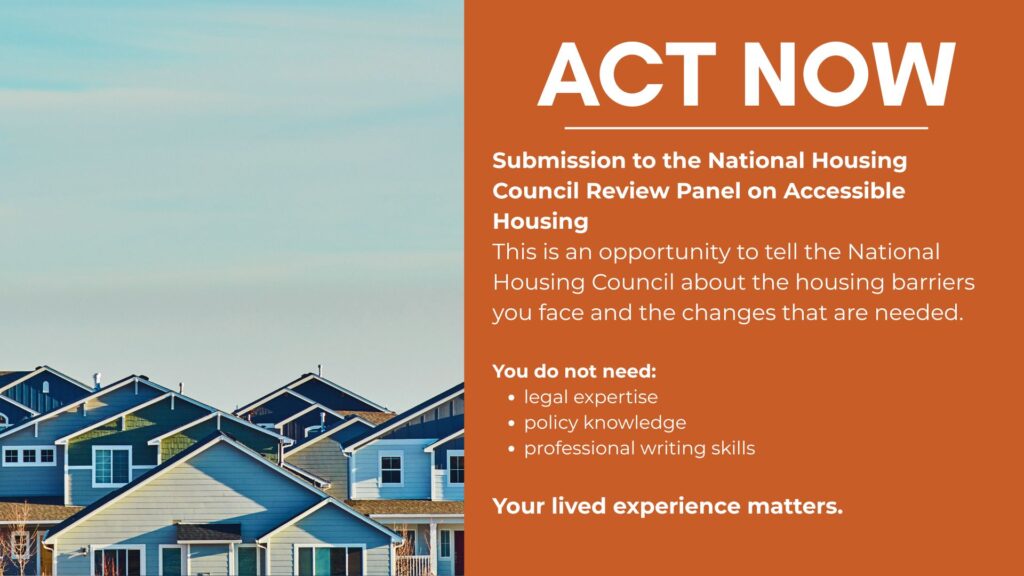
Submission to the National Housing Council Review Panel on Accessible Housing
The National Housing Council is seeking public input on accessible housing in Canada. This webpage was developed by the Environmental Health Association of Canada (EHAC-ASEC) and the Environmental Health Association of Québec (ASEQ-EHAQ) to help people living with Multiple Chemical Sensitivity (MCS) participate in the consultation by sharing their experiences, housing barriers, and recommendations for change.
Submission Deadline
June 22, 2026
Please do not wait until the last day. You can begin now, save your progress, and return later.
Survey Link
Complete the National Housing Council survey
Why This Matters
Many people living with MCS face serious barriers to safe and accessible housing. These may include chemical exposures, fragrances, renovations, smoke drift, pesticides, mould, shared ventilation, inaccessible shelters, lack of accommodation, and the high cost of healthier housing.
Housing accessibility must include the indoor environment. People should not have to choose between protecting their health and having a place to live.
Resources to Help You Submit
We have prepared resources to help you understand the process and prepare your submission: – PowerPoint tutorial: How to Submit Your Experiences – Participant guide: A Guide for People Living with Multiple Chemical Sensitivity (MCS) – Key questions to help you remember your experiences – Examples of housing barriers and recommendations . |
What You Can Share
You may wish to discuss:
- chemical exposures in housing
- fragrances, smoke, pesticides, mould, renovations, or shared ventilation
- inability to tolerate conventional housing
- lack of accommodation
- inaccessible shelters or temporary housing
- fear of retaliation
- housing insecurity or forced moves
- remaining in housing that affects your health because there are no safe alternatives
Community Recommendations
Workshop participants identified several priorities:
- Affordable and healthy housing
- Emergency safe housing
- Disability supports and housing affordability
- Education and awareness for landlords, housing providers, contractors, and government agencies
- Accessible seniors’ housing, assisted living, supportive housing, and long-term care
- Innovative low-emission housing models, such as Ecoasis Québec
- Transparent product labelling and chemical disclosure
Need Help?
If you need help understanding the questions, organizing your thoughts, preparing responses, or completing the survey, please contact us.
Email: contact@aseq-ehaq.ca
Phone: 514-332-4320
You do not have to do this alone.
Final Message
Throughout MCS Awareness Month, we have worked together to raise awareness, build understanding, and advocate for recognition, accessibility, and inclusion.
But awareness alone is not enough.
This consultation gives us an opportunity to turn awareness into action.
Every submission helps build the evidence needed to show that accessible housing must include accessible indoor environments.
Thank you for helping advance accessible, healthy, and inclusive housing for people living with Multiple Chemical Sensitivity.